The connection between your hands and the car
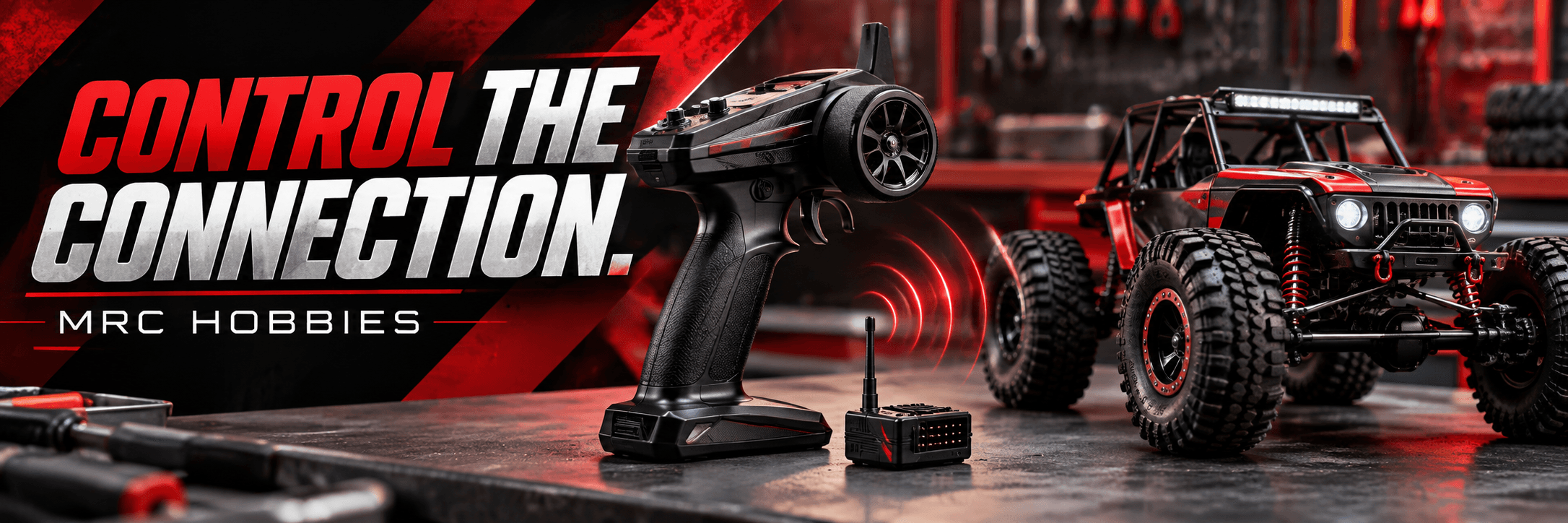
The transmitter converts your steering-wheel and trigger movements into radio commands. The receiver in the vehicle interprets those commands and passes signals to components such as the steering servo and ESC. A reliable setup depends on compatible equipment, correct installation, and careful configuration. Many surface radios operate in the 2.4 GHz band, but sharing a frequency band does not guarantee that a transmitter and receiver can work together. Manufacturers use different protocols and generations; Futaba's receiver compatibility note provides a clear example.
What do channels mean?
A channel is a separate control function. A typical RC car uses one for steering and one for throttle. Additional channels may operate lights, a winch controller, a shifting servo, or other accessories, provided the complete system supports them. A six-channel receiver does not automatically give a two-channel transmitter six independently controllable functions. Check both devices, the available switches, and the model's wiring.
Radio termPlain-English meaningTransmitterThe hand-held controller that sends commands.ReceiverThe unit in the car that receives the compatible radio signal.Binding or linkingThe manufacturer-defined process that associates a receiver with a transmitter.ChannelA separately controlled output or function.Steering trimA small neutral adjustment to help the car track straight.EndpointsLimits set for steering or another channel's travel.FailsafeA defined response when usable control signal is lost, where supported and configured.
Binding is the first compatibility test
Use the exact binding procedure in both manuals. Confirm the transmitter's protocol matches the receiver; a receiver from the same brand can still use a different incompatible protocol. Keep the vehicle safely supported while testing and verify that steering and throttle respond in the intended directions. The Spektrum surface radio manual describes binding and setting a failsafe position for its system.
Set steering before chasing range
Centre the steering trim, install the servo horn according to the car's instructions, and check that the wheels point straight. Adjust endpoints so the servo does not strain against the steering stops. If steering feels reversed, use the transmitter's reversing function as directed by the manual and check again before driving. Setup mistakes can look like bad electronics.
What is failsafe?
Failsafe describes what a compatible receiver does if it loses a usable transmitter signal. The available modes and positions differ by model. Set the throttle response to the manufacturer's recommended safe state, then test the function using the manufacturer's procedure with the wheels off the ground or the car restrained. Do not assume a newly bound receiver has the response you intended. Spektrum's surface receiver documentation shows that even one product family can provide different failsafe choices.
Range depends on installation and surroundings
Route the receiver antenna as its manual specifies, away from damaged wiring and obstructing metal or carbon parts where practical. Inspect for a cut or crushed antenna. Terrain, buildings, other equipment, and antenna position affect usable range. Perform the radio maker's range test before an important outing, especially after changing the receiver installation. Stay within sight of the vehicle and stop if control becomes intermittent. Manufacturer advice also varies for boats because water can affect signal propagation; Spektrum's DSMR overview discusses antenna placement in that setting.
Buying checklist
Confirm the transmitter and receiver protocol, number of controls actually available, receiver size, antenna arrangement, receiver power requirements, failsafe behavior, and any desired telemetry support. If you plan to run several cars with one radio, check model memory and receiver pairing behavior. Buy for the functions you will use, with room for the accessories you genuinely expect to add.
Final thoughts
A good RC radio system should feel predictable. Select compatible hardware, bind it correctly, set the controls and failsafe, and test range in the manner specified for that system. Those setup steps matter more than a channel count printed on the box.
Explore RC cars and electronics: MRC Hobbies
Visit: MRC Hobbies, 201, P. N. Kothari Industrial Estate, next to Navkar Hospital, Bhandup West, Mumbai, Maharashtra 400078
WhatsApp: +91 77840 93093
Instagram: @mrchobbies
YouTube: MRC Hobbies