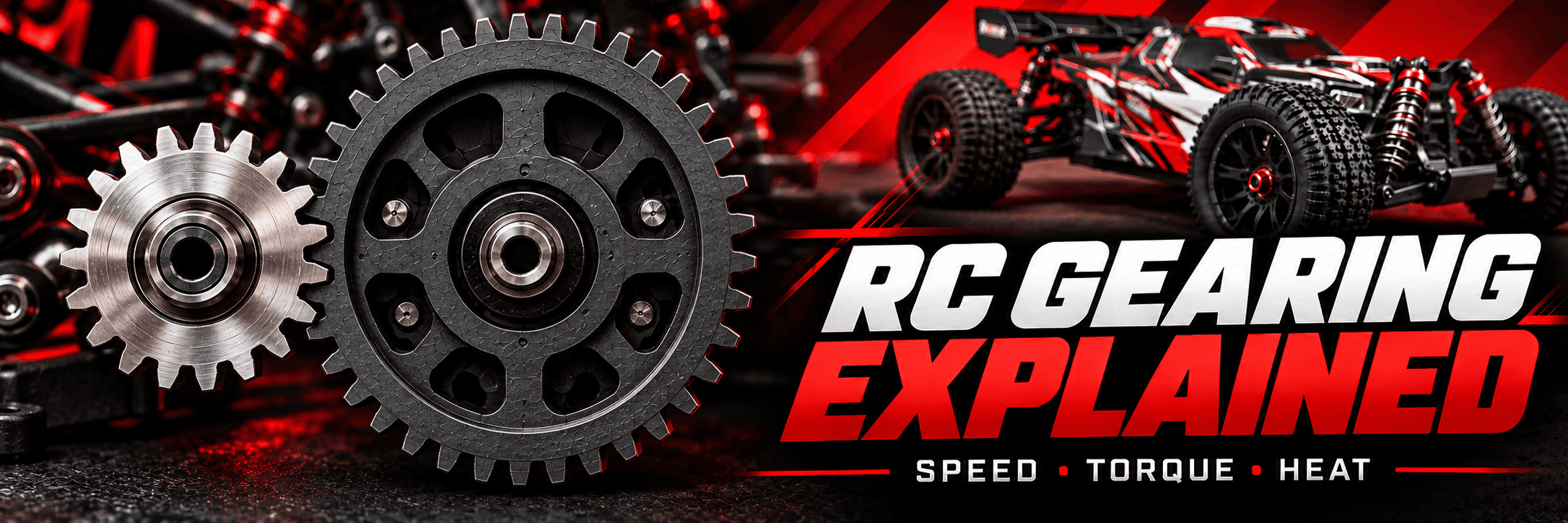
A small gear can make a big difference
The pinion is the smaller gear attached to the motor shaft. It drives the larger spur gear in many RC cars. Changing either gear changes the mechanical ratio between motor and wheels. That can alter acceleration, potential speed, and the load the motor and ESC must carry.
The basic relationship
For the pinion-and-spur pair, divide spur teeth by pinion teeth. A 60-tooth spur and 20-tooth pinion give a 3:1 ratio at that stage. The car's overall final drive ratio also includes internal transmission or differential gearing, so the simple spur-to-pinion figure is only one part of the drivetrain.
Change, with everything else equalUsual effectMain cautionLarger pinionTaller gearing; potentially more wheel speedMore load and heat, less mechanical advantageSmaller pinionShorter gearing; more mechanical advantageLower potential top speedLarger spurShorter gearingCheck fit and gear cover clearanceSmaller spurTaller gearingCheck load, heat, and fit
These are general tendencies. Tires, terrain, battery, driving style, and motor characteristics can change the result.
Why tall gearing can overheat a car
A car working through thick grass, repeated hard acceleration, heavy tires, or a steep climb places more load on its electronics. Tall gearing increases the work needed from the motor at low speed. A setup that survives a short straight-line pass may run too hot in a long grass session. Manufacturers recommend checking temperatures after motor, battery, or gearing changes.
Change one thing at a time
Begin with the model's recommended gearing. If you change the pinion, use the correct gear pitch or module and shaft bore; gears that look close may not mesh correctly. Set the mesh according to the vehicle manual, reinstall the cover, and make a brief test run on the surface you normally drive. Check motor and ESC temperatures against their own manufacturers' limits, then inspect the gears for unusual noise or wear. Make small changes and repeat. Do not use a universal temperature number for every motor.
Signs to stop and inspect
Stop if the car suddenly slows, the ESC enters protection, the drivetrain becomes unusually noisy, or the motor and ESC approach their stated limits. Heat can also come from binding bearings, damaged gears, brakes dragging, oversized tires, or a battery mismatch. Gearing is a common cause, but it is not the only one.
Gear mesh matters
A mesh that is too tight creates friction and wear; one that is too loose can damage teeth. Follow your specific car's instructions when setting motor position. After tightening the motor mount, rotate the drivetrain by hand and check that it moves smoothly. Recheck the mount after a hard impact.
Final thoughts
Gearing is a trade between wheel speed, mechanical advantage, and heat. Start from the recommended setup, test on your real driving surface, and let the motor and ESC temperatures guide the next step. That is more useful than chasing the biggest possible pinion.
Explore RC parts and accessories: MRC Hobbies
Visit: MRC Hobbies, 201, P. N. Kothari Industrial Estate, next to Navkar Hospital, Bhandup West, Mumbai, Maharashtra 400078
WhatsApp: +91 77840 93093
Instagram: @mrchobbies
YouTube: MRC Hobbies