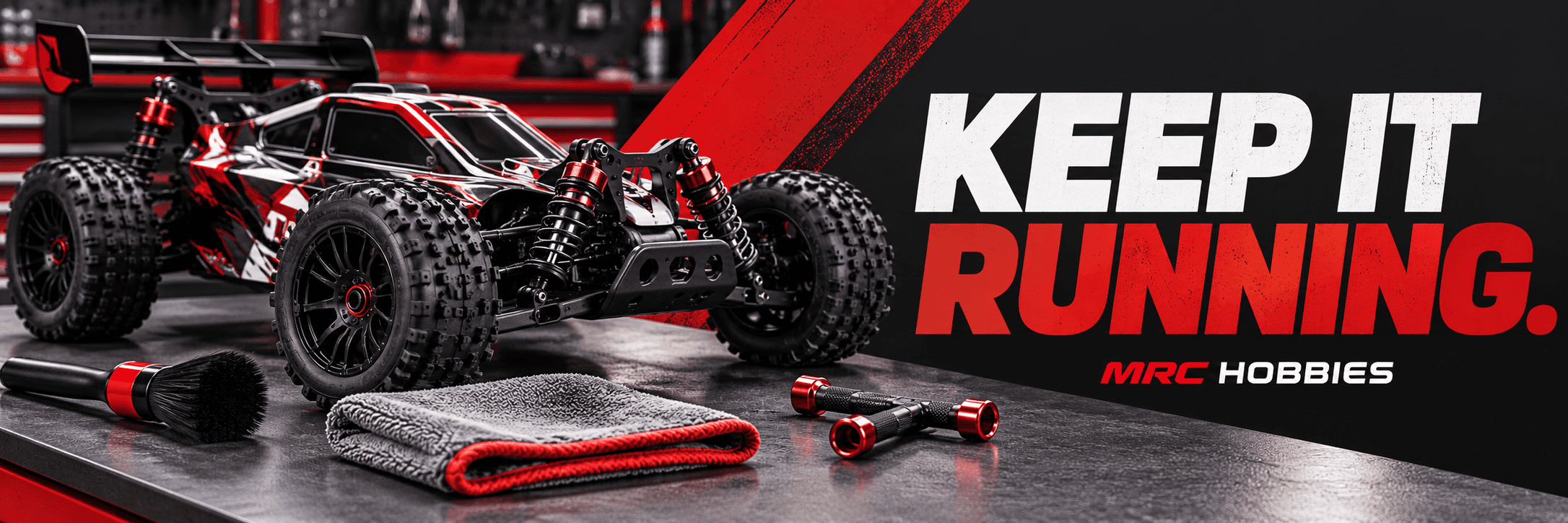
The fun lasts longer when the car is ready
A great RC session can end early because of something small: a loose wheel nut, grass wrapped around an axle, or a battery that was put away incorrectly. A few minutes of care before and after driving can make your RC car more reliable and easier to enjoy. You do not need a full workshop to start. A brush, clean cloth, suitable tools, and a repeatable routine are enough for basic upkeep.
Before you drive: five quick checks
- Inspect the tires and wheels. Check for loose wheel nuts, torn tires, and anything caught in the axles. A wheel that wobbles deserves attention before a fast run.
- Look over the steering. With the car safely raised, turn the wheels left and right. They should move freely without a linkage rubbing or binding.
- Check the drivetrain. Roll the car gently and listen for an unusual grinding sound. Do not force a drivetrain that feels jammed.
- Secure the battery and body. Make sure the battery is held firmly, wires are clear of moving parts, and body clips or mounts are fitted.
- Confirm the radio responds. Switch on the transmitter first, then the car, and test steering and throttle in a safe open space. Follow your model's manual for its exact startup procedure.
After a run: clean by surface, not by habit
Dry dust usually comes off with a soft brush and microfiber cloth. Mud should be allowed to loosen or dry enough to remove gently without pushing grit into bearings and joints. Pay attention to the underside, suspension arms, wheel hubs, and cooling openings. If your model is rated for wet use, check the manual for the limits of that rating; electronics, bearings, and metal hardware may still need drying and care. Avoid spraying the entire car with water unless the manufacturer specifically permits that cleaning method.
Battery care is part of maintenance
Let a warm battery cool before charging it. Use a charger suitable for its chemistry and cell count, inspect the pack and connector for damage, and follow the battery maker's charging and storage instructions. A swollen, damaged, or unusually hot pack should not go back into the car. For LiPo packs, use the charger's appropriate storage mode when the pack will sit unused, according to its instructions. Never leave a charging battery unattended.
A simple maintenance schedule
WhenWhat to doBefore every runCheck wheels, steering, battery mount, radio response, and visible damage.After every runRemove dirt and debris; dry the car where needed; inspect tires and connectors.Every few runsCheck accessible screws, shocks, suspension play, and drivetrain noises.After a hard crashStop and inspect steering, arms, wheel hubs, body mounts, and wiring before driving again.
Common mistakes to avoid
Do not tighten every screw as hard as possible; plastic threads can strip. Do not lubricate every exposed part, because grease in the wrong place collects dust. Avoid pulling a battery out by its wires. Most importantly, investigate a new noise or sudden loss of steering instead of continuing to drive.
Make the routine enjoyable
Keep a small RC kit with a soft brush, microfiber cloth, correctly sized tools, spare body clips, and your model manual. Take a photo before disassembling a part so reassembly is easier. A short maintenance routine is also a good way for new hobbyists to learn how their car works.
Final thoughts
RC maintenance is not complicated. Inspect before driving, clean after driving, and address small issues while they are still small. The exact service intervals and products depend on your model, so use its manual as the final guide.
Explore RC cars and parts: MRC Hobbies
Visit: MRC Hobbies, 201, P. N. Kothari Industrial Estate, next to Navkar Hospital, Bhandup West, Mumbai, Maharashtra 400078
WhatsApp: +91 77840 93093
Instagram: @mrchobbies
YouTube: MRC Hobbies