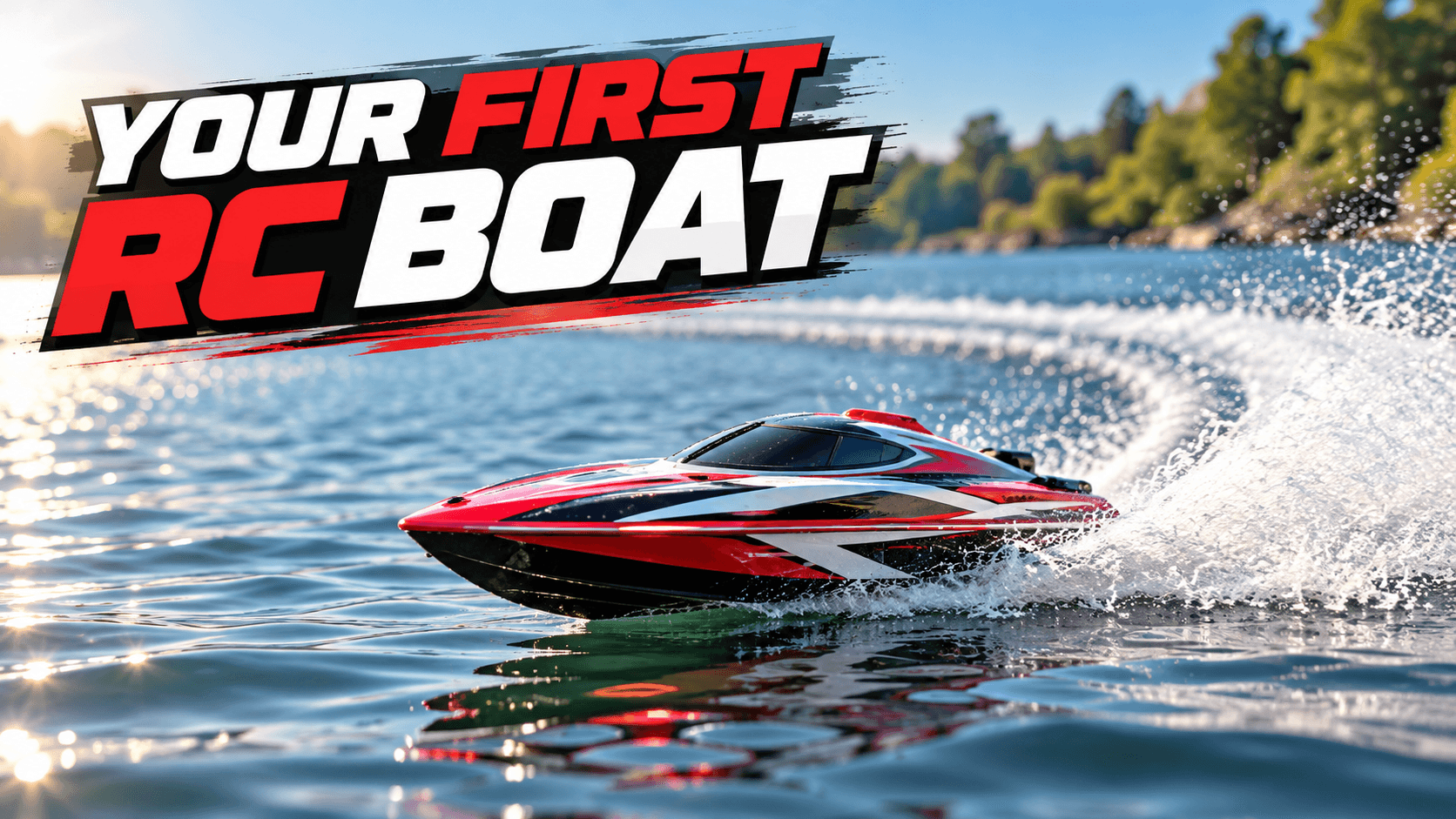
A different kind of RC adventure
An RC boat changes the way you think about a driving line. Instead of tyres and corners, you work with water conditions, turning radius and the distance between your boat and the shore. Watching a boat skim across a calm lake can be exciting, but the best first session begins with careful preparation.
You do not need to chase maximum speed straight away. A boat that is easy to see, launch and retrieve will help you enjoy more time on the water.
Choose a boat for where you will run it
Start with your actual location. A small, sheltered body of water suits a very different boat from one intended for a large open lake. Check local access rules and choose a place where RC boats are permitted. Look for a clear launch point, room to turn and a shoreline you can reach safely.
When comparing boats, consider their size, visibility, turning behaviour, battery access and availability of replacement parts. Some models have features such as a self-righting hull or a low-battery alert, but you should confirm exactly what the model you are buying includes. A larger or faster boat may need more open space and a more careful retrieval plan.
What to check before launch
Before setting the boat on the water, inspect the hull for cracks and make sure any hatch or cover is seated according to the model's instructions. Check that the propeller and rudder move freely with the power off. Install a suitably charged battery, connect it as directed and confirm that the radio controls respond correctly.
Set the boat on a stand or hold it securely during a brief control check. Keep fingers, loose clothing and objects away from the propeller. Check the transmitter batteries too; a fully charged boat battery is not much help if the radio loses power.
Your first run: stay close and learn the turns
Launch gently into clear water. Keep the boat close enough to see its direction and practise short, straight runs at moderate throttle. Make wide turns first. When a boat is coming toward you, left and right can feel reversed, so slow down before making a correction.
As you get comfortable, practise an oval course using two visible landmarks on shore. Avoid abruptly applying full throttle through every turn. Different hulls respond differently, and rough inputs can make a boat difficult to control.
Pay attention to wind and current. Even a light breeze can carry a stopped boat away from your launch point. Turn back with plenty of battery remaining rather than waiting for the boat to slow down far from shore.
Plan how you will retrieve it
Every boater should have a sensible recovery plan before the first launch. A rescue boat operated from a safe position, an appropriate retrieval tool or help from a venue operator may be useful depending on the location. Never enter unsafe water to retrieve an RC boat. If the venue has a designated recovery procedure, follow it.
Choose a calm, accessible site for the first sessions so a minor problem does not become a major one.
After the run
Bring the boat ashore, disconnect the battery and inspect the hull. Remove any water according to the maker's instructions and dry accessible parts thoroughly. Check the propeller for weeds or fishing line and inspect the hull and drivetrain before the next trip. Follow the battery maker's charging and storage instructions.
Start boating with MRC Hobbies
Explore the RC range at mrchobbies.com and ask us for help matching a boat to your available water, experience and budget. Tell us where you plan to run it so we can discuss practical size and setup choices.
MRC Hobbies · 201, P. N. Kothari Industrial Estate, next to Navkar Hospital, Bhandup West, Mumbai, Maharashtra 400078
WhatsApp: +91 7784093093
Instagram: @mrchobbies
YouTube: MRC Hobbies