Why tires change the whole drive
A motor upgrade may get the attention, but the tires determine how that power reaches the ground. The wrong tire can spin on grass, slide through a corner, or struggle on rocks even when the car itself is capable. Before buying a new set, start with the surface you drive on most often.
Match the tread to your terrain
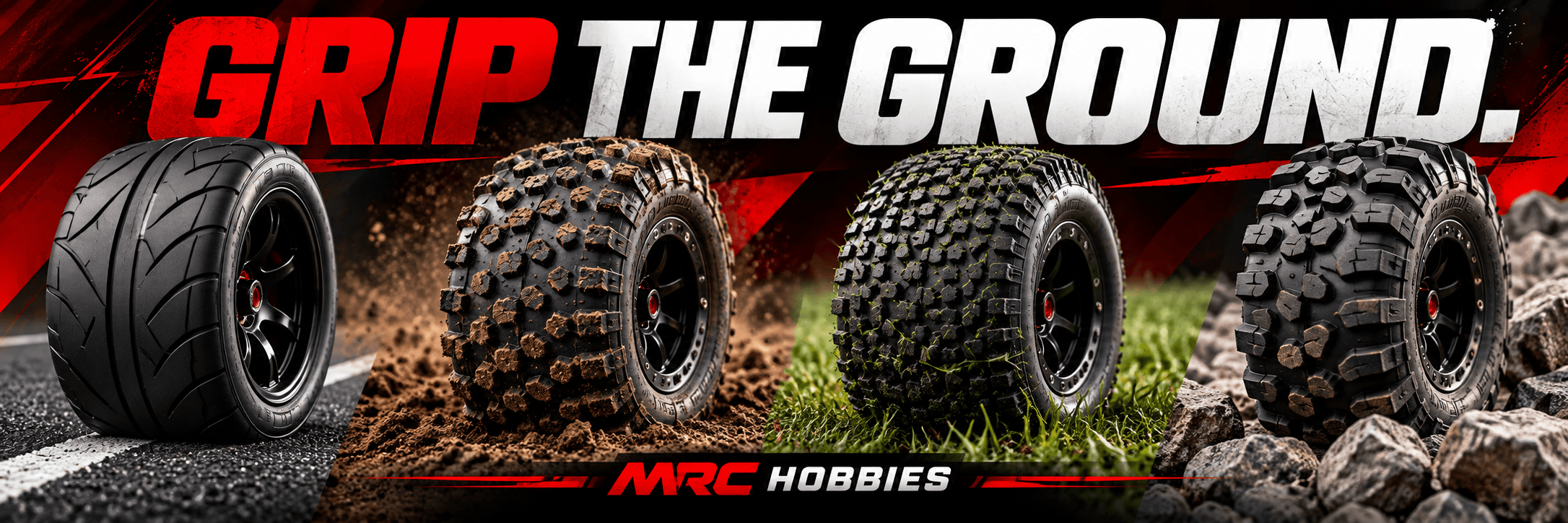
SurfaceTire features to considerWhat to watch forSmooth pavementRoad-style tread or slicks designed for the surfaceAggressive off-road knobs can wear quickly and feel imprecise.Loose dirtSpaced pins or blocks that can bite and shed soilVery tight tread may pack with dirt.Short grassTaller, well-spaced lugs and suitable ground clearanceTall grass also adds drag and can wrap around moving parts.Rocks and crawler trailsFlexible compound and tread with edges that conform to obstaclesA tire that is too stiff may struggle for grip at low speed.Mixed groundA versatile all-terrain patternA compromise tire may not excel on a dedicated race surface.
Terrain varies. Hard-packed dirt and loose sand call for different patterns, while wet surfaces can change grip completely. Ask what ground the tire was designed for rather than judging it only by appearance.
Tread is only one part of the choice
Compound affects how a tire grips and wears. Softer rubber can offer more grip on some surfaces, often with faster wear. Inserts or foams support the tire's shape and influence how it deforms under load. Crawler drivers may value controlled deformation, while faster cars need predictable support in corners. Diameter and width affect clearance, handling, and gearing load. A much larger tire can change the way the motor, steering, and drivetrain behave.
Check fitment before ordering
Read the model's wheel size and hex size, then check the tire's diameter, width, wheel offset, and body clearance. A tire can fit the axle but still rub against the body or suspension at full steering lock. If the tire is sold without a wheel, confirm whether it needs gluing and which wheel it fits. For a crawler, also check whether the wheel and tire use a compatible beadlock arrangement.
Three practical tire setups
- Neighborhood road run: Choose a road-oriented tire that gives stable steering and sensible wear on pavement.
- Weekend dirt track: Choose a tread suited to the dirt's looseness and keep the tires clean between runs so the pattern can work.
- Slow rocky crawl: Prioritize an appropriate compound and insert setup, then test how the tire conforms at low speed.
These are starting points. Your model's weight, power, driving style, and local terrain will refine the choice.
Simple tire care
Remove stones and debris from the tread after a run. Check for cuts, separated glue, loose beadlock hardware, and uneven wear. If one tire wears much faster, inspect alignment and drivetrain behavior before buying another set. Store tires away from excessive heat and direct sunlight according to the manufacturer's guidance.
Final thoughts
The best RC tire is the one that fits your car and works on the surface you actually drive. Start with terrain, confirm dimensions, then experiment with tread and inserts. A well-chosen tire set can make the same RC car feel far more controlled.
Explore RC cars, wheels, and accessories: MRC Hobbies
Visit: MRC Hobbies, 201, P. N. Kothari Industrial Estate, next to Navkar Hospital, Bhandup West, Mumbai, Maharashtra 400078
WhatsApp: +91 77840 93093
Instagram: @mrchobbies
YouTube: MRC Hobbies