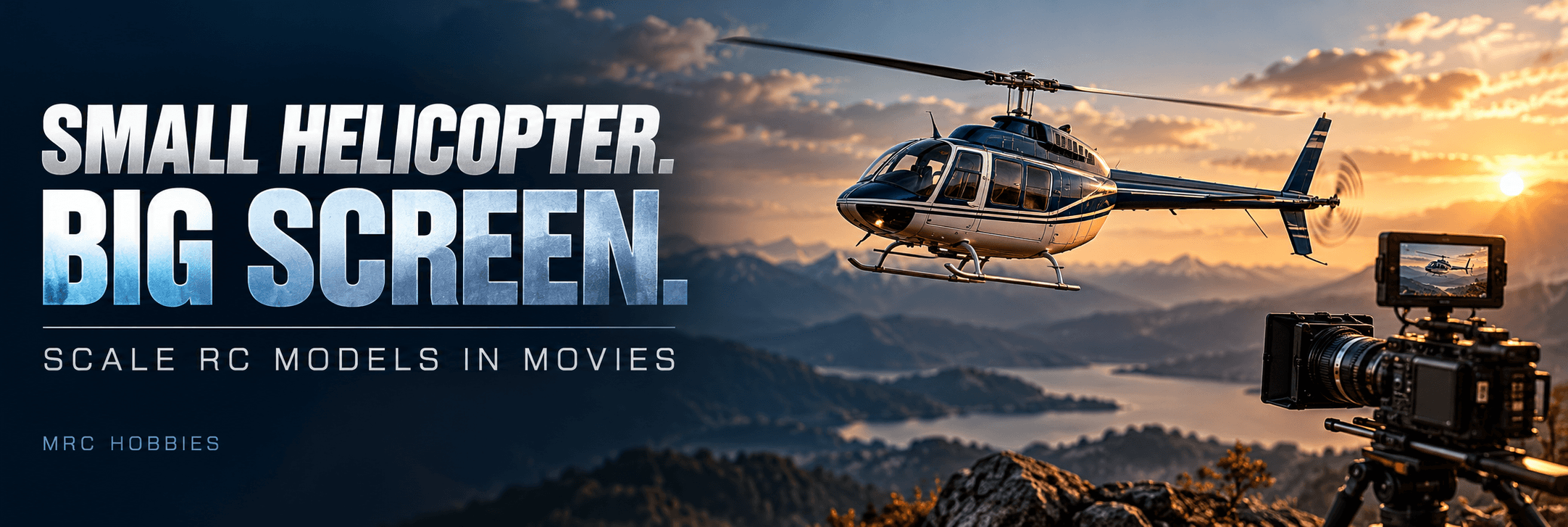
A helicopter flies across the screen, turns above a landscape and becomes part of an exciting movie sequence. To the audience, it appears to be a full-size aircraft. However, a shot can be created using a smaller replica, filmed so that its actual dimensions are not obvious.
In this application, a scale RC helicopter replaces the full-size helicopter as the aircraft appearing in the scene. A separate camera records its movement.
The model’s body design, paintwork, cockpit and visible details help it resemble the real aircraft. Camera angles, backgrounds, lighting and editing then support the impression that viewers are watching a much larger machine.
This brings together two interests: the engineering of RC models and the visual storytelling of filmmaking.
What Makes an RC Helicopter a Scale Replica?
A scale helicopter is designed to resemble a particular real aircraft or aircraft type.
Its appearance depends on recognisable features such as:
- Fuselage and nose shape.
- Cockpit windows and cabin proportions.
- Tail design.
- Landing skids or wheels.
- Paint scheme and markings.
- Visible surface details.
An RC version adds remote-controlled operation. For a filmed flight sequence, the model needs both a convincing appearance and a suitable flying configuration.
A bare aerobatic helicopter and a scale replica have different visual purposes. The scale model presents an aircraft body that can represent the helicopter required by the story.
Why Use a Model Instead of the Full-Size Aircraft?
A miniature approach gives filmmakers another way to create an aircraft image.
The production can work with a replica built around the appearance needed for the scene. The shot can then be planned around that model’s movement and the camera’s viewpoint.
However, using a miniature is not automatically cheaper or easier. Building the replica, operating it, photographing it convincingly and completing the effects can require substantial expertise.
The decision depends on the shot. Filmmakers must consider whether a model can produce the required image and how it will connect with the rest of the sequence.
Helicopter Miniatures Have a Place in Cinema
Helicopter miniatures have documented uses in filmmaking.
MPC’s account of its work on Skyfall describes using miniature helicopter imagery in the effects, including re-projecting a miniature onto adjusted animation for wider shots. MPC Paris
That example establishes the use of helicopter miniatures, but it does not establish that the particular model was a freely flying RC helicopter.
This distinction matters. A production might use a flying RC replica, a mechanically supported model, a static miniature or a digital aircraft. Each method creates the image differently.
Matching the Helicopter Seen in the Story
The replica needs to match the aircraft it represents.
The silhouette is especially important. Viewers may recognise a helicopter through its nose, cabin, tail and landing arrangement before noticing smaller details.
Paintwork and markings support that recognition. If the sequence also includes footage of a full-size aircraft, the model should match the appearance established in those shots.
A difference in body shape, colour or markings can make the transition noticeable. Consistency helps the audience accept the miniature as the same aircraft.
The level of detail should also suit the planned view. A distant shot and a close shot place different demands on the model.
How Camera Framing Creates the Illusion of Size
Viewers judge size through visual clues.
A nearby person, familiar object or clearly readable ground detail can reveal that the helicopter is small. The filmmaker therefore considers which references appear in the frame.
A distant landscape or sky can provide fewer obvious size comparisons. This is one possible creative approach, subject to the location and flight plan.
The model’s distance, lens choice and composition need to work together. The objective is a convincing relationship between the aircraft and its surroundings.
A realistic replica alone is not enough if the framing immediately reveals its scale.
Flight Movement Must Match the Real Aircraft
Movement is another important part of the illusion.
A realistic body can look like a hobby model if it makes abrupt changes or performs manoeuvres unlike the aircraft being represented.
The flight should suit the scene. A departure, passing flight, hover and gradual turn each have a different visual rhythm.
For miniature filmmaking, controlled and consistent movement can be more valuable than demonstrating demanding aerobatics.
The pilot’s task is to help create the aircraft behaviour required by the story.
Lighting Helps the Model Belong in the Scene
Lighting influences how the aircraft’s shape and surface appear.
Highlights and shadows should agree with the environment, particularly if the footage will later be combined with another background.
Window reflections, paint finish and visible details also affect the result. A model that looks convincing on a workbench may photograph differently.
Test footage lets the team evaluate the replica as a screen image. It can reveal whether the surface finish, lighting and viewpoint create the intended impression.
Practical Models and Digital Effects Can Work Together
A miniature does not have to provide every element of the final shot.
Its recorded image can be combined with digital work. MPC’s Skyfall account illustrates a production using miniature imagery alongside animation and other effects. MPC Paris
For a proposed RC sequence, post-production might combine the photographed aircraft with another background or refine the composition.
The physical model supplies part of the image. Editing and visual effects help integrate it with the surrounding scene.
Different Ways to Create a Helicopter Shot
MethodAircraft represented on screenHow the shot is createdFull-size filmingThe actual helicopterCamera records the full-size aircraftFlying scale RC replicaA smaller model representing the real aircraftSeparate camera records remotely controlled flightRigged miniatureA smaller model representing the real aircraftA support mechanism positions or moves itDigital aircraftA computer-generated helicopterModelling, animation and renderingCombined approachElements from several methodsPhotography and visual effects are combined
The production selects the method around the scene rather than assuming one technique suits every shot.
Planning a Scale RC Helicopter Sequence
Start with the aircraft the story requires and the view the audience should see.
Does the shot need a detailed close view, a distant silhouette or a sustained movement across the frame? That decision shapes the model and filming requirements.
Next, consider appearance and flight together. A convincing fuselage must be part of a suitable flying configuration.
Choose a location and plan separate positions for the camera and aircraft operation. Record tests, then review the movement, lighting and apparent scale.
Those tests help the team adjust the shot before recording the final sequence.
Sound Completes the Impression
The sound recorded during model filming does not have to become the final soundtrack.
Sound design can give the finished sequence an aircraft character appropriate to the story. The audio, movement and editing should support the same impression.
A convincing miniature image can feel inconsistent if its sound suggests a completely different machine.
This demonstrates how the final illusion depends on several elements working together.
Where Goosky Fits into the Discussion
Goosky can be discussed through helicopter control and hobby technology. However, no Goosky miniature movie credit or specific scale conversion was verified for this article.
Using helicopter mechanics inside a scale body requires model-specific compatibility and a suitable flying configuration. A fuselage should not be assumed to fit or function simply because its size appears appropriate.
The focus here is the filmmaking technique: a matching scale replica represents a full-size helicopter on screen. Brand-specific claims need evidence for the actual model or production.
What RC Enthusiasts Can Learn
Miniature filmmaking introduces a different purpose for RC operation.
Instead of focusing only on speed or aerobatic ability, the operator considers appearance, repeatability and how movement will look through a camera.
The filmmaker considers framing, background and continuity. Together, they work toward a believable screen image.
This makes scale RC an interesting meeting point between mechanical design, flying skills and creative production.
Common Mistakes to Avoid
- Calling every helicopter miniature a flying RC model.
- Using movement that does not suit the aircraft being represented.
- Including visual clues that immediately reveal the model’s size.
- Ignoring differences between the replica and full-size footage.
- Assuming any scale body fits any helicopter mechanism.
- Claiming movie credits without production evidence.
Final Thoughts
A scale RC helicopter can be filmed as a stand-in for a full-size aircraft. Its matching design provides the physical subject, while controlled movement, lighting, camera work and editing establish its apparent size.
This is a compelling connection between RC and filmmaking: a small replica can become a convincing aircraft in the story when the complete shot is built around it.
Explore RC Technology with MRC Hobbies
Explore RC helicopters, electronics and educational projects at MRC Hobbies.
Address: 201, P. N. Kothari Industrial Estate, next to Navkar Hospital, Bhandup West, Mumbai, Maharashtra 400078.
Phone / WhatsApp: +91 77840 93093
Instagram: @mrchobbies
YouTube: MRC Hobbies