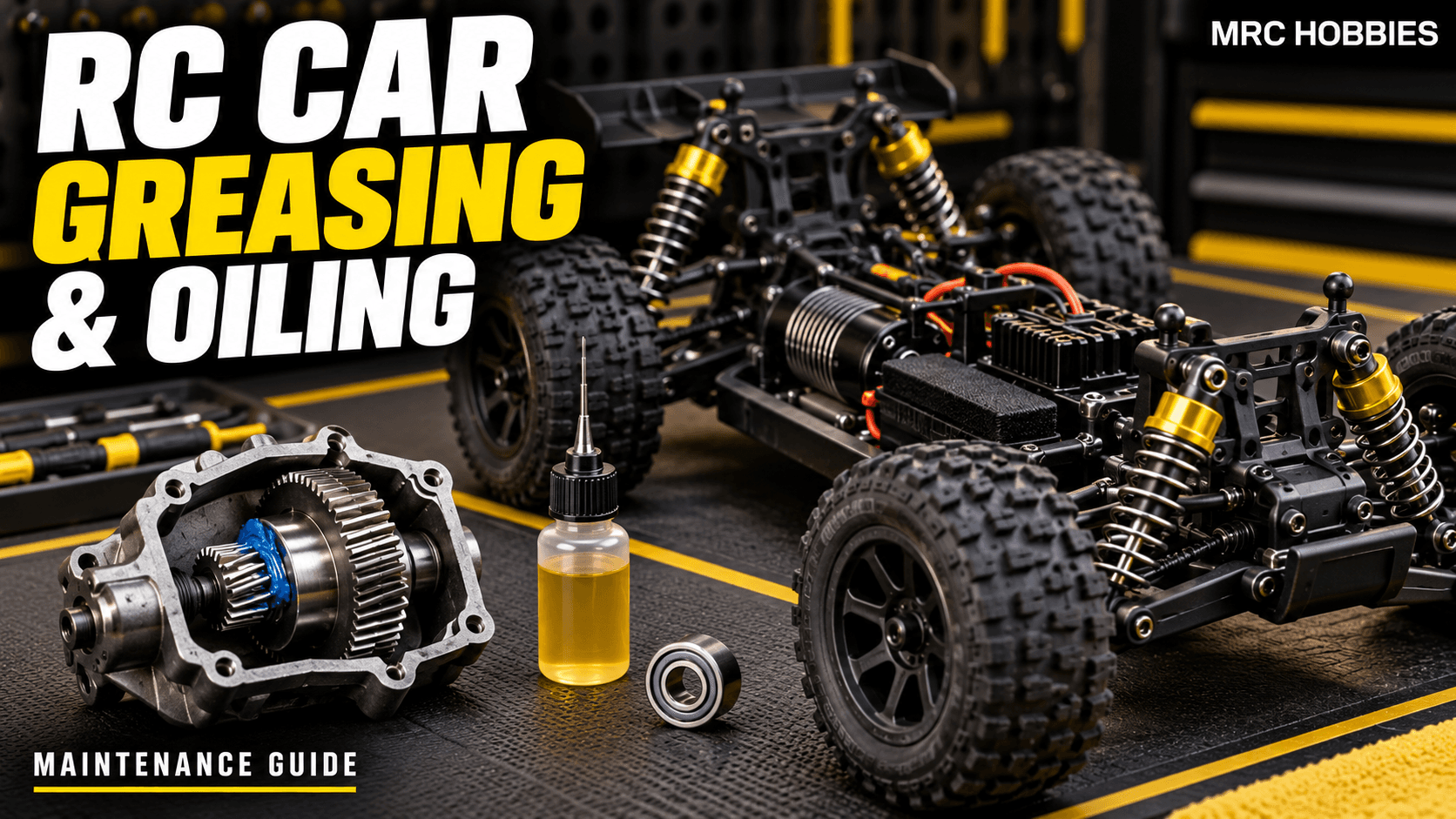
Start with Your RC Car’s Manual
Different RC cars have different lubrication requirements. A crawler’s enclosed portal gears, a buggy’s differential and a truck’s exposed spur gear may each need a different approach.
Check your model’s manual before applying lubricant. For example, Traxxas specifies grease on certain metal transmission gears while leaving nylon gears ungreased on its TRX-6. Tamiya supplies a gearbox grease specifically compatible with plastic gears. The component and lubricant both matter.
Grease and Oil Have Different Jobs
Grease stays in place better than a thin oil, making it useful for specified gear contacts. Light bearing oil can suit bearings designed to be serviced that way.
Shock and differential fluids have another role: their viscosity affects suspension damping or differential behaviour. They should be selected for the particular assembly.
ComponentGeneral approachEnclosed gearbox or portal gearsApply the grease specified for that assemblyServiceable bearingsFollow the prescribed cleaning and lubrication procedureSealed gear differential internalsUse the specified differential fluid or greaseOil-filled shocksUse the specified shock fluid and viscosityExposed spur and pinion gearsCheck the manual; many run dry
One bottle should not be treated as a solution for the entire car.
Clean Before You Lubricate
Start with the car switched off and the battery disconnected. Brush away loose dirt before opening any assembly, and keep screws and small parts organised.
Remove contaminated lubricant using a cleaning method suitable for the materials involved. Inspect the parts before adding fresh lubricant.
Worn teeth, damaged seals and rough bearings need attention. Adding more grease cannot repair a damaged component.
Where Grease Belongs
Enclosed metal gears may require grease on their contact surfaces. Apply the amount and type specified in your manual, then rotate the assembly by hand to check that it moves freely.
On the TRX-6, for example, Traxxas calls for cleaning and regreasing portal gears and a light coating on metal transmission teeth. That instruction should not be extended automatically to every gear on every RC car.
Avoid filling a housing with grease unless its service instructions require it.
Oiling Bearings and Driveshaft Joints
Bearing maintenance depends on the bearing’s construction and intended lubricant. A sealed, grease-filled bearing should not automatically be flushed with thin oil.
For a serviceable bearing, follow the manufacturer’s procedure and check its condition after cleaning. Replace bearings that remain rough, loose or damaged.
Some driveshaft joints also have specific lubrication instructions. Traxxas, for example, specifies a drop of light oil on certain pins and cross pins, while warning that excess oil encourages dust and dirt buildup.
Shock Oil and Differential Oil Need Separate Attention
Shock oil belongs inside the shock during proper servicing. Applying oil to the outside of a leaking shock does not restore its damping. Inspect the seals and follow the rebuild procedure; Traxxas specifies pure silicone shock oil for the model covered in its Slash VXL manual.
Differentials also vary. Some use grease internally, while suitable sealed units use silicone differential fluid. Changing viscosity changes handling, so start with the factory specification before experimenting.
Common Lubrication Mistakes to Avoid
A careful application is more useful than coating the whole chassis.
- Applying fresh lubricant over dirt and old grease.
- Greasing every gear without checking its requirements.
- Using a lubricant without checking plastic and seal compatibility.
- Getting lubricant onto tyres, brake surfaces or slipper-clutch friction pads.
- Treating unusual noises or binding as a reason to add oil without inspecting the cause.
Motor care is also model-specific. Follow its service instructions rather than spraying lubricant through the motor.
Check After Every Adventure
After a run, look for trapped dirt, moisture, leaks and changes in how the wheels or drivetrain move.
Wet use can require additional disassembly, drying and lubrication. Follow your model’s wet-running procedure promptly instead of putting the car away damp. Traxxas specifically calls for increased drivetrain inspection and service after extended wet use.
There is no single greasing schedule that suits every RC car. Your manual, driving conditions and inspection findings should guide the work.
Need Help Choosing RC Maintenance Supplies?
Unsure which grease, bearing oil, shock oil or differential fluid suits your model?
Speak with MRC Hobbies about your RC car and the component you are servicing. Share the model name and manual specification so we can discuss the appropriate supplies.
Call / WhatsApp: +91 77840 93093
Instagram: mrc_hobbies
Email: contact.mrchobbies@gmail.com
Website: mrchobbies.com
When did you last check your RC car’s gears and bearings?