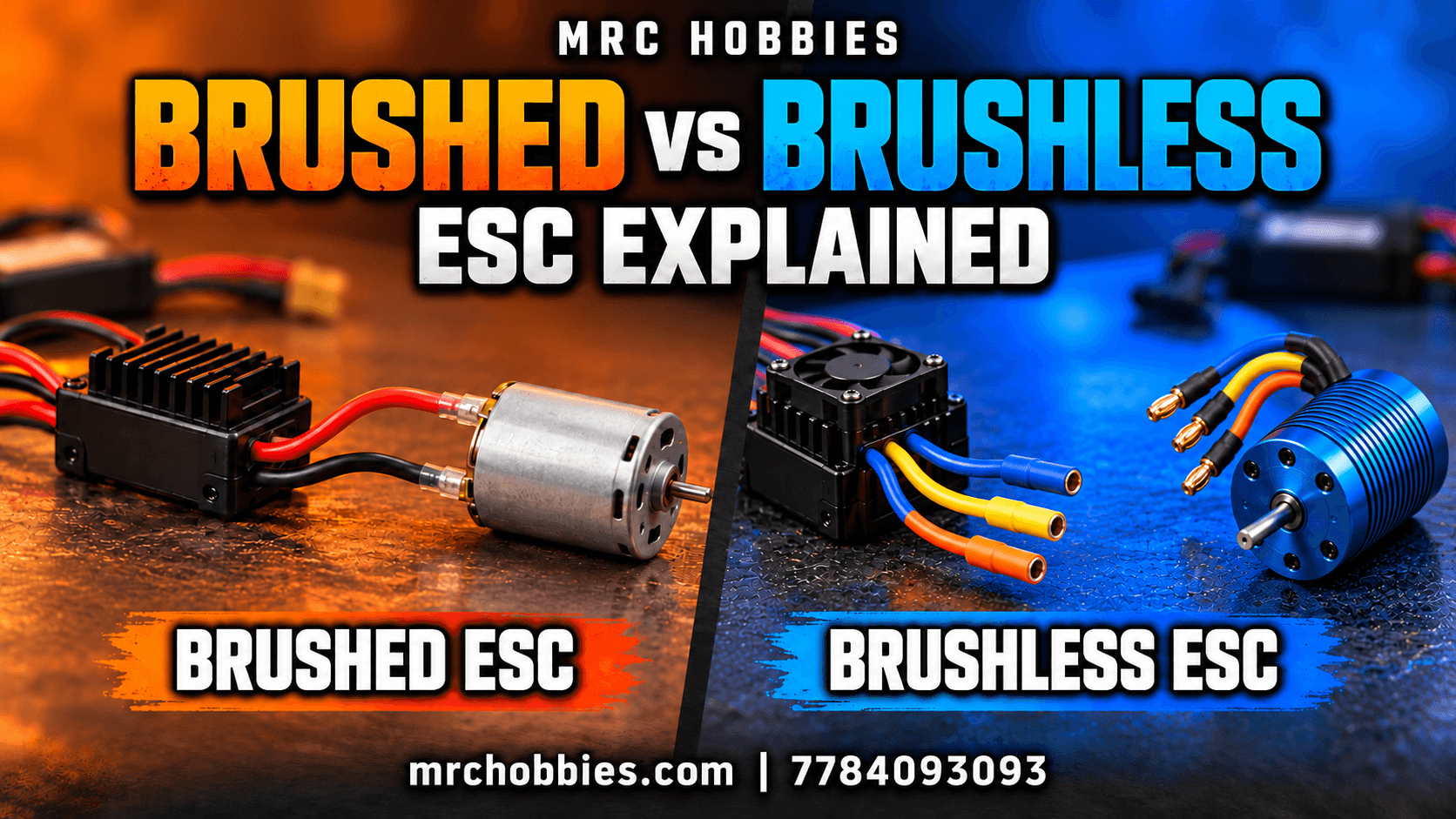
Both systems use an ESC—Electronic Speed Controller—to control motor power, but they operate differently. Matching the ESC to the motor is essential for a working setup.
Let’s explore the differences with MRC Hobbies.
What Does an ESC Do?
An ESC takes the throttle command from your receiver and controls electrical power flowing from the battery to the motor.
Depending on the model, it may also provide braking, reverse, low-voltage protection and power for the receiver and servo through a built-in BEC.
Features vary between ESCs, so always check the specifications of the exact unit.
What Is a Brushed ESC?
A brushed ESC controls a brushed motor, which uses internal brushes and a commutator to switch current through its windings.
The ESC regulates motor power, typically using rapid electrical switching called pulse-width modulation.
A conventional brushed RC motor has two motor connections, so a brushed ESC normally has two output wires going to it. Battery and receiver wires are separate.
Brushed systems are commonly used in budget RC cars, crawlers and scale vehicles.
What Is a Brushless ESC?
A brushless motor does not use brushes to perform this switching. Instead, the ESC energises the motor’s phases in a controlled sequence to keep it rotating.
A typical hobby brushless motor has three phase connections, with three motor wires running from the ESC.
Brushless systems are used across racing cars, bashers, crawlers, aircraft and boats. The ESC must still suit the particular vehicle and application.
Brushed vs Brushless ESC: Quick Comparison
FeatureBrushed ESCBrushless ESCCompatible motorBrushed motorBrushless motorTypical motor output wiresTwoThreeMotor commutationBrushes and commutator inside motorElectronic switching controlled by ESCControl complexityGenerally simplerMore complex phase controlTypical system costOften lowerOften higher, depending on specificationLow-speed behaviourCan provide smooth crawling controlDepends on sensor system, control technology and tuningMotor maintenanceBrushes and commutator can wearNo brushes to replace; bearings still need attention
Important: “Brushless” does not automatically mean faster, waterproof or better for every vehicle.
Sensored vs Sensorless Brushless ESCs
Brushless systems have another important distinction.
Sensorless systems usually estimate rotor position from electrical signals. Some can hesitate or “cog” when starting very slowly under load.
Sensored systems use rotor-position information from motor sensors, typically through an additional sensor cable. Compatible setups can offer more controlled starts and low-speed operation.
Some advanced sensorless systems also provide excellent crawling performance. Judge the complete motor-and-ESC combination rather than relying only on the label.
Can You Use a Brushed Motor with a Brushless ESC?
Only if the ESC explicitly supports brushed operation.
Some ESCs offer both modes, but many are designed for one motor type. Follow the manufacturer’s instructions for supported modes, wiring and programming.
A standard brushed-only ESC cannot operate a conventional three-phase brushless motor.
Does a Brushless Upgrade Always Increase Speed?
No. Speed depends on the complete setup, including:
- Motor specification.
- Battery voltage.
- Gearing and tyre diameter.
- Vehicle weight and load.
- ESC settings and system limits.
A brushless crawler can be designed for precise low-speed driving, while another brushless system may prioritise high-speed performance.
Choose equipment for the driving experience you want.
What Should You Check Before Buying an ESC?
Motor Compatibility
Check motor type, supported size and the manufacturer’s motor limits.
Battery Compatibility
Confirm supported chemistry and cell count. A higher-current ESC does not automatically allow a higher-voltage battery.
Current and Cooling Requirements
Choose an ESC suitable for the vehicle’s load and gearing. Current ratings from different manufacturers are not always directly comparable.
BEC Output
Make sure the BEC voltage and current suit your receiver, servo and connected accessories.
Braking and Reverse Modes
Crawlers, racing cars and boats can require very different behaviour. Check for the functions your model needs.
Receiver Connections
Vehicles with an integrated receiver-and-ESC board may require a separate receiver when upgrading.
Which System Should You Choose?
A suitable brushed setup can be an economical choice for repairs, casual driving and crawling.
A suitable brushless setup can offer efficient power delivery and avoid brush wear, with options ranging from controlled crawling to demanding high-speed use.
The right choice is the combination that matches your vehicle, budget and driving goals.
Find Suitable RC Electronics at MRC Hobbies
Not sure which ESC fits your model? Share your vehicle name, motor details, battery specification and a clear photo of the existing electronics.
Visit MRC Hobbies
📍 Address:
201, P. N. Kothari Industrial Estate, next to Navkar Hospital, Bhandup West, Mumbai – 400078
🛒 Shop RC Cars, Electronics and Parts
Match your motor. Choose the right ESC. Get more from every drive!